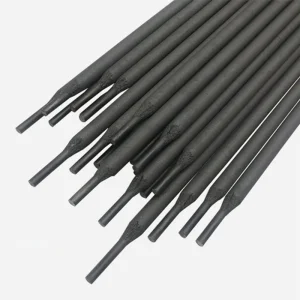
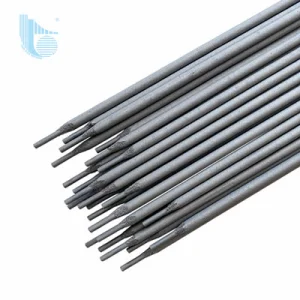
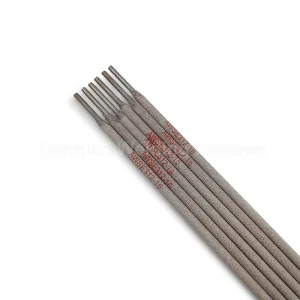
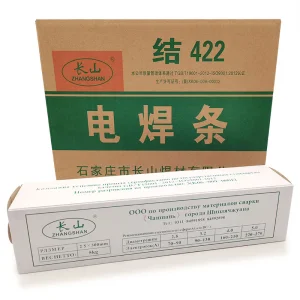
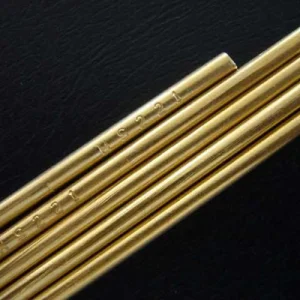
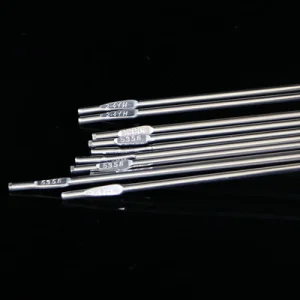
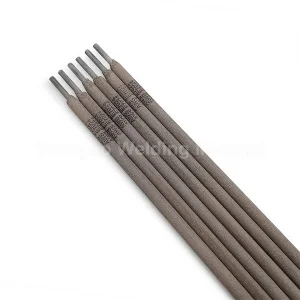
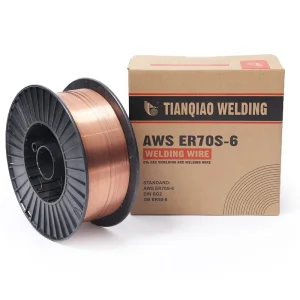
In the modern industrial era, the demand for Surfacing Welding Rods (often referred to as hardfacing electrodes) has transcended basic repair. It is now a critical component of Surface Engineering. Globally, the surfacing market is driven by the urgent need to extend the service life of expensive industrial components subject to severe abrasion, high-temperature oxidation, and metal-to-metal friction.
From the mining pits of Australia to the cement kilns of Germany, surfacing rods like D608 and D256 are essential for maintaining equipment efficiency and reducing downtime costs.
Modern surfacing technology focuses on complex carbide structures. Manufacturers are now utilizing chromium-boron and tungsten-carbide alloys to achieve hardness levels exceeding 60 HRC.
There is a significant shift toward High-Efficiency Surfacing. Global procurement teams are moving away from traditional electrodes toward high-recovery rods that offer more metal deposit per hour.
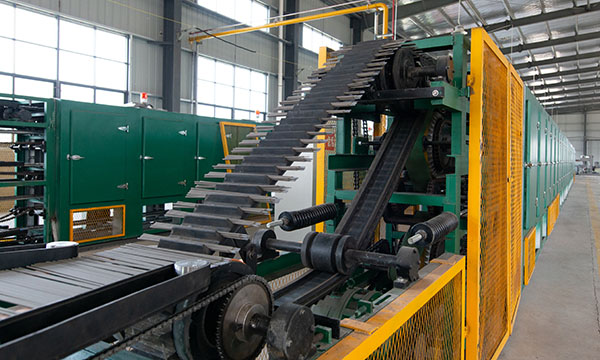
As a leading Surfacing Welding Rod Factory, the competitive edge of Chinese manufacturing lies in the integration of massive scale and rapid R&D iteration. Shijiazhuang Tianqiao Welding Materials Co., Ltd. exemplifies this efficiency.
Surfacing is not a "one-size-fits-all" solution. The choice of rod depends heavily on the wear mechanism.
Applying D256 (EFeMn-A) to crusher jaws and bucket teeth. These high-manganese rods work-harden under impact, providing a self-renewing wear surface.
For plowshares and tillers, low-impact but high-abrasion rods are used to maintain sharp edges, significantly reducing the fuel consumption of tractors by maintaining tool geometry.
Using D507 for valve seats and shafts. These rods are designed to withstand high temperatures and prevent metal-to-metal seizure (galling) in extreme environments.
Roller presses and vertical mill components require chromium carbide overlays. Our surfacing rods ensure these critical assets run for thousands of hours without maintenance.
Hard-facing of drill collars and tool joints to prevent "downhole wear" in abrasive geological formations, using tungsten-carbide enriched electrodes.
Pump impellers and suction heads in coastal engineering are treated with corrosion-resistant surfacing alloys to fight both erosion and saltwater oxidation.
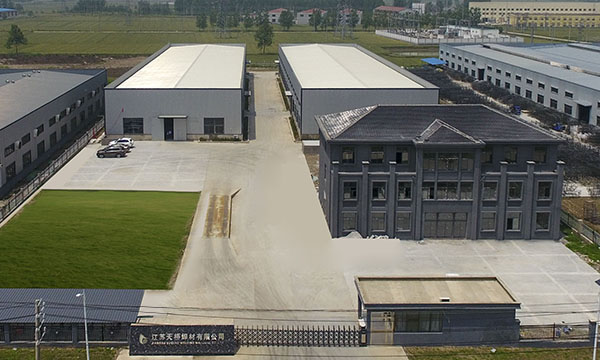
Founded in 2007, Shijiazhuang Tianqiao Welding Materials Co., Ltd. has established itself as a benchmark for quality in the North China welding industry. Located just 30 kilometers southwest of Shijiazhuang, our facility enjoys prime logistical connectivity near the 107 national highway and major expressways.
Under the prestigious brands "Yuanqiao" and "Changshan", we produce a comprehensive catalog including: Low carbon steel, low alloy steel, heat-resistant steels, stainless steel, cast iron, and our flagship hard surfacing welding electrodes. Our R&D department consistently innovates in sintered flux and mixed welding powders, ensuring our products exhibit elegant welding molding, stable mechanical performance, and superior slag removal.
Our footprint spans the US, Europe, South America, Australia, Africa, the Middle East, and Southeast Asia. We operate under the spirit of "Supreme Quality, Honesty, Win-Win Cooperation", fostering long-term relationships with distributors worldwide.
For industrial buyers, sourcing from a factory is about more than just price. It's about Information Gain and risk mitigation.
Ensure the supplier provides Mill Test Certificates (MTC). A 1% variance in Chromium can lead to a 20% reduction in wear life.
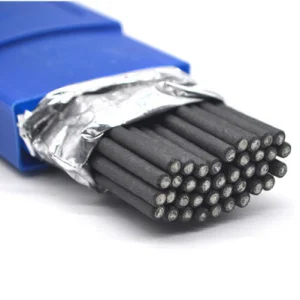
Surfacing rods are prone to hydrogen-induced cracking. Look for suppliers using vacuum-sealed packaging or specialized moisture-resistant coatings.
High hardness often means high brittleness. A professional supplier like Tianqiao will help you find the "Sweet Spot" between HRC hardness and impact resistance.
D608 is primarily for high-abrasion resistance (Cr-Mo alloy), while D256 is a high-manganese steel rod designed for components subject to heavy impact and stress, as it work-hardens during use.
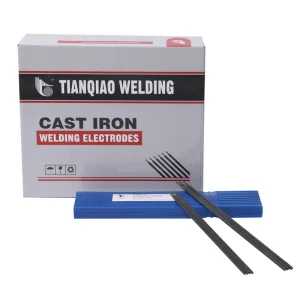
Yes, but you must use specialized rods like Z408 (AWS ENiFe-CI) which are designed to handle the high carbon content of cast iron without cracking during the cooling phase.
Generally, for soil abrasion, 50-60 HRC is ideal. For metal-to-metal sliding, 30-45 HRC with high toughness is better to prevent spalling or chipping.
Typical production cycles are 15-25 days depending on the volume. Our proximity to Shijiazhuang logistics hubs allows for rapid transit to major ports like Tianjin.
 Tianqiao Welding