Explore our foundational range of AWS-certified welding electrodes, flux-cored wires, and industrial fluxes engineered for extreme structural environments.
How Modern Infrastructure and Advanced Heavy Fabrication Requirements are Redefining Consumable Engineering Standards Internationally.
In the contemporary landscape of global manufacturing, industrial metal fabrication has evolved far beyond raw stamping or basic assembly. High-stress environments—ranging from deep-sea offshore drilling platforms to high-temperature petrochemical containment vessels—demand absolute consistency in structural joints. Because a welded joint represents the critical point of potential fatigue failure, structural engineers must treat welding consumables as highly engineered alloy complexes, not just simple commodities.
With international standards such as AWS (American Welding Society) and EN ISO dictating tighter tolerance bands on chemical components and hydrogen diffusion levels, manufacturers are pressured to deliver extreme weld metal deposit performance. Achieving this level of mechanical reliability requires precise control over core wire drawing, metallurgical consistency, and coating compound stability. Standardized testing for tensile strength, elongation limits, and sub-zero Charpy V-Notch (CVN) impact toughness has become mandatory to prevent structural catastrophic failures.
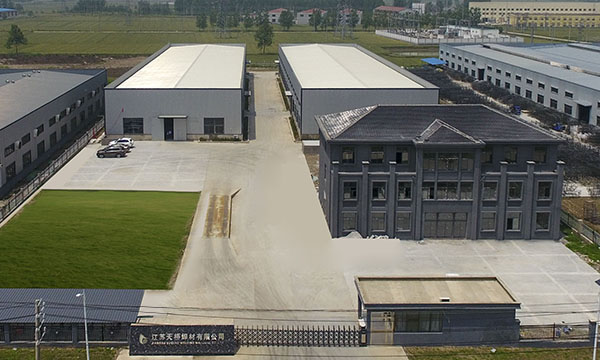
Founded in 2007, Shijiazhuang Tianqiao Welding Materials Co., Ltd is located 30 kilometers southwest of Shijiazhuang. Our facility is highly accessible, situated just 20 kilometers west of the 107 National Highway and in close proximity to the Shixing and Jingzan Highways. This strategic logistics hub allows us to execute rapid global distribution with minimal internal transport delay.
Over the past decades, we have established a strong technical foundation, backed by complete product testing equipment that keeps our output quality exceptionally stable. The company structure is highly specialized, consisting of an active Production Department, Technical Department, R&D Department, dedicated QC & Laboratory team, Sales Department, and a highly coordinated Logistics division. Operating under our core corporate philosophy of "Supreme Quality, Honesty, and Win-Win Cooperation," we focus on providing customized, reliable metallurgical solutions to clients worldwide.
Merging automation, raw material integration, and laboratory testing to assure continuous, reliable worldwide distribution.
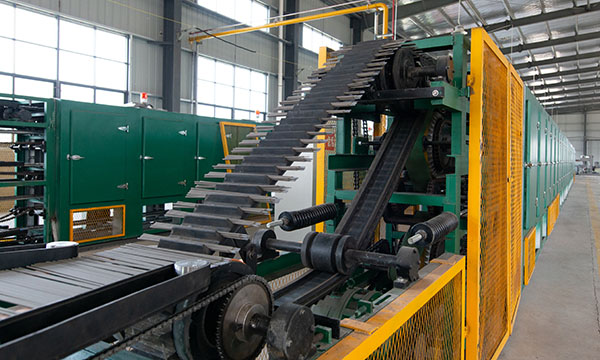
Our raw materials undergo strict spectral analysis before production. We use automated dry-wet mixing processes to ensure homogeneous coating distribution across every batch of electrodes.
By using modern concentric extrusion systems, we guarantee consistent coating concentricity, avoiding off-center arc strikes and minimizing weld splatter in the field.
Every production batch is tested for crack resistance, porosity levels, and slag release capability. This ensures our clients receive materials ready to face rigorous x-ray inspection.
Our flagship brands, "Yuanqiao" and "Changshan", represent decades of chemical research and formulation improvements. We address the primary failure modes of structural joints by controlling deposit metal mechanics, diffusible hydrogen levels, and micro-alloying additions.
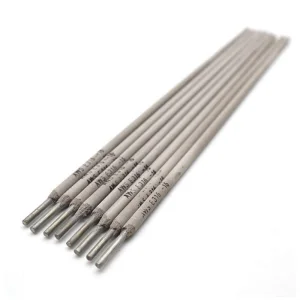
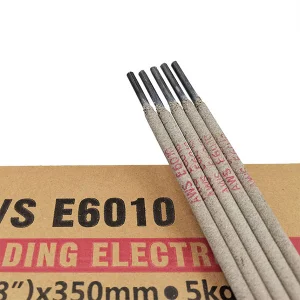
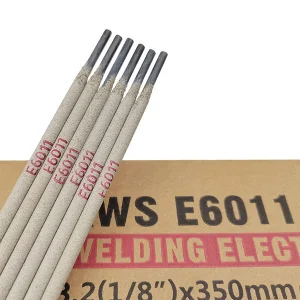
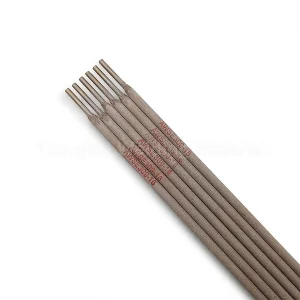
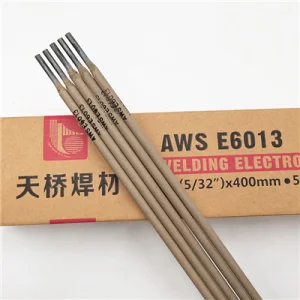
For structural construction, we optimize our low carbon steel electrodes (e.g., E6013, E6010, E6011) to balance penetration depth and slag detachability. By selecting specific rutile and cellulose coating constituents, we ensure the arc remains stable even on low-voltage AC or DC machines. The weld pool has high surface tension, allowing for excellent out-of-position welding (overhead and vertical up). Meanwhile, our low-alloy steel formulations contain micro-additions of nickel, chromium, and molybdenum, which refine the microstructural grain size of the deposit and prevent heat-affected zone (HAZ) embrittlement.
Corrosion resistance requires strict control over the carbon content in stainless steel consumables. Our AWS E316-16 and E309-16 electrodes feature extra-low carbon levels, which prevent chromium carbide precipitation at the grain boundaries, avoiding intergranular corrosion. For wear resistance in heavy mining and heavy industrial components, we produce high manganese steel surfacing electrodes (D256 / AWS EFeMn-A) and valve surfacing electrodes (D507) that handle extreme impact and abrasive sliding wear.
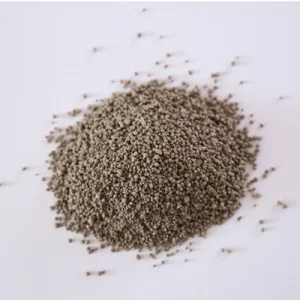
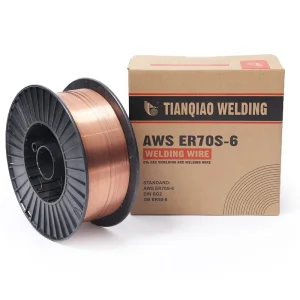
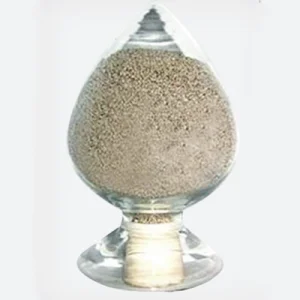
Modern high-speed fabrication projects rely heavily on Submerged Arc Welding (SAW) and Gas Metal Arc Welding (GMAW). Our SJ301 and SJ302 sintered fluxes feature low hydrogen activity and high basified indices. When paired with solid wires like ER70S-6, they create a protective slag blanket that prevents atmospheric nitrogen and oxygen from contaminating the weld pool. This results in clean weld metal deposits with high mechanical integrity, suitable for thick plate construction and pressure vessel shells.
Bridging heavy infrastructure requirements with standardized, certified welding consumables.
Our products are 100% exported and actively used in demanding environments across the US, Europe, South America, Australia, Africa, the Middle East, and Southeast Asia. The table below highlights how our specific consumable lines map to international applications:
| Industrial Sector | Applicable Material Class | Critical Performance Metrics |
|---|---|---|
| Petrochemical & Pressure Vessel | AWS E316-16, SJ301 + Wire | Intergranular corrosion resistance, high temp creep strength, X-ray clearance. |
| Shipbuilding & Marine Structures | E71T-1C, ER70S-6, E71T-11 | Low-temperature impact toughness, resistance to seawater corrosion, high deposition rate. |
| Power Generation & Boilers | Heat-resistant alloy steel series | Microstructural stability under thermal cycles, low hydrogen cracking risk. |
| Heavy Mining & Excavation Machinery | D256 (EFeMn-A), D507 | Work-hardening properties, high impact toughness, excellent resistance to abrasive wear. |
Addressing key technical and logistics questions from procurement managers and welding engineers.
We perform optical emission spectrometry (OES) on all incoming wire rod shipments and dry powder batches. Our automatic PLC-controlled batching system measures flux coating ingredients to within +/- 0.5% tolerance. This guarantees consistent chemical deposit performance and weld pool viscosity during application.
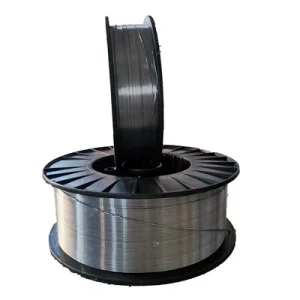
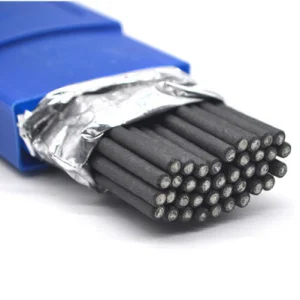
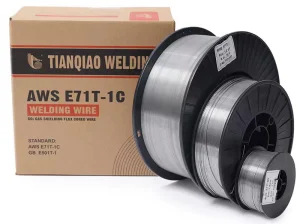
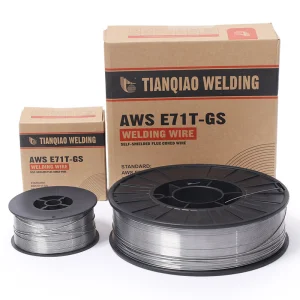
Low-hydrogen consumables like E71T-1C must be protected from moisture to prevent hydrogen-induced cold cracking. We ship our products in hermetically sealed packaging. If exposed to the elements, basic electrodes should be re-baked at 300°C–350°C for 1 to 2 hours before welding.
Yes. Our in-house R&D department can customize coating chemistries and core wire alloying elements to match target carbon equivalent values (CE) or meet specific sub-zero Charpy V-notch toughness requirements.
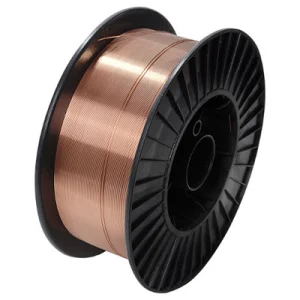
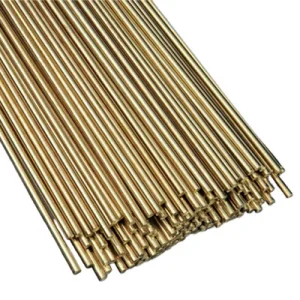
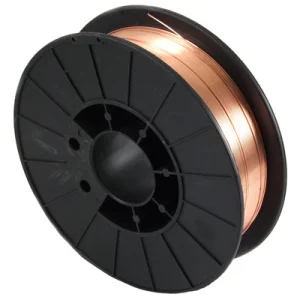
Complete your supply chain with our selection of gas-shielded wires, sub-arc flux formulations, and specialized brass brazing rods.
 Tianqiao Welding