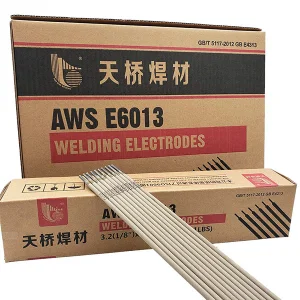
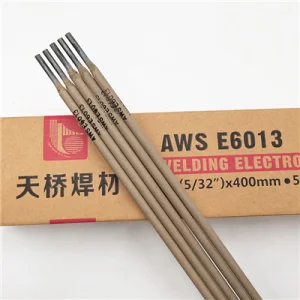
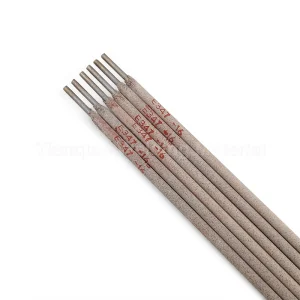
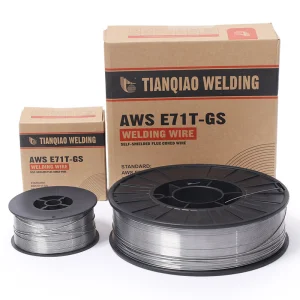
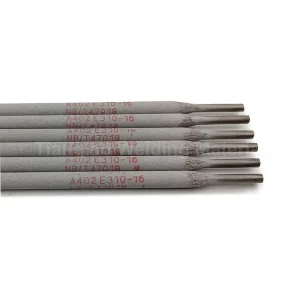
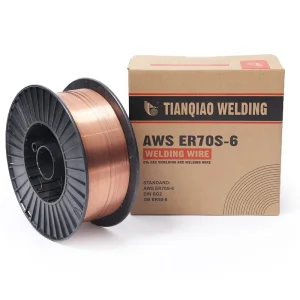
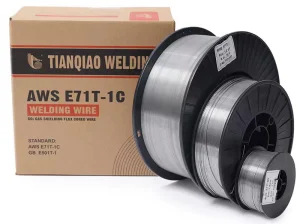
The AWS E6013 welding rod, traditionally categorized as a high-titania potassium type electrode, has undergone a technological renaissance in China's manufacturing sector. As a leading China 6013 welding rods manufacturer & factory, Shijiazhuang Tianqiao Welding Materials Co., Ltd. has pioneered the integration of advanced rutile mineral processing and localized potassium silicate synthesis to produce electrodes that exceed traditional AWS A5.1 standards.
Modern industrial applications require more than just "bonding metal." Today's procurement demands involve information increment: understanding how the arc stability of a J421 (the Chinese equivalent of E6013) influences the heat-affected zone (HAZ) in thin-sheet fabrication. Our proprietary flux formulation ensures a soft, stable arc and low spatter, which directly translates to reduced post-weld grinding costs and higher throughput for global EPC projects.
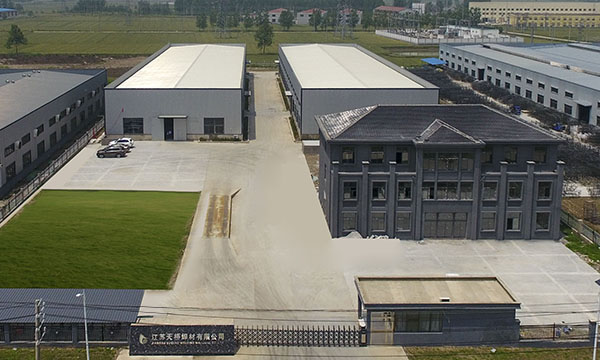
Shijiazhuang Tianqiao Welding Materials Co., Ltd was founded in 2007 located in 30 kilometers in the southwest of Shijiazhuang. Our factory traffic is very convenient just 20 kilometers to the west of 107 national highway, also near to the Shixing and Jingzan highway. We have strong technical force, complete product testing equipment so that we can keep stable product quality. Our company is composed of production department, technical department, R&D department, QC & Laboratory, Sale department, Logistic department.
Under the spirit of "Supreme Quality, Honesty, Win-Win Cooperation", we are willing to achieve common development and create brilliance with all customers. We are looking forward to establishing mutual benefit, long-term and stable relationships with customers and distributors all over the world. We believe we can achieve a splendid future by our efforts together.
In the landscape of China welding electrode manufacturing, the E6013 "Rutile Grade" is often misunderstood as a "general-purpose" tool. However, our R&D department views it as a precision metallurgical instrument. By optimizing the ratio of titanium dioxide (TiO2) in the coating, we achieve a fluid slag that detaches effortlessly, even in tight-groove joints.
Incorporating potassium compounds allows for a low ionizing potential, ensuring the arc remains stable even when using low open-circuit voltage (OCV) AC transformers.
Our J421 formulation provides a self-peeling slag, significantly reducing labor hours in large-scale structural assembly.
Designed for aesthetics, our 6013 rods produce a fine-rippled bead appearance, critical for visible architectural steelwork.
The global demand for 6013 rods is shifting from simple commodity buying to "Total Cost of Ownership" (TCO) evaluation. Professional buyers in the US, Europe, and Southeast Asia are increasingly looking for manufacturers who provide localization support and 合规保障 (Compliance Assurance).
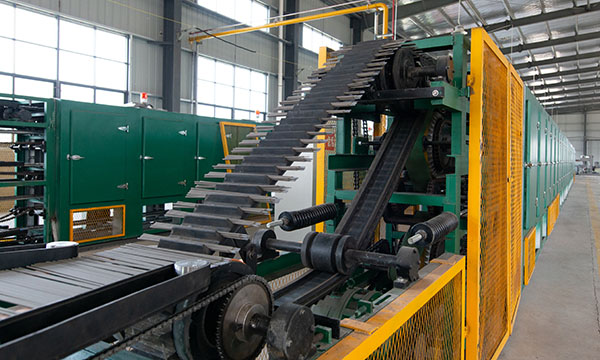
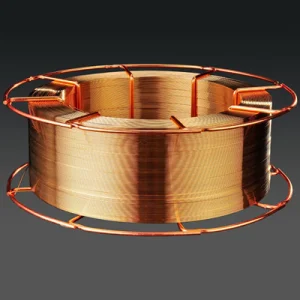
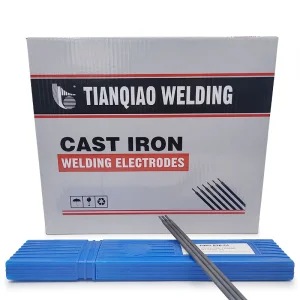
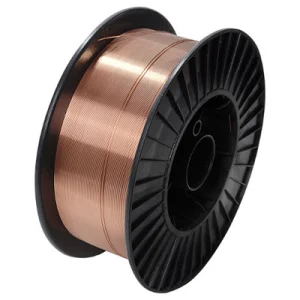
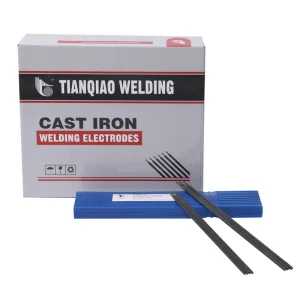
Our products include various brands like "Yuanqiao" and "Changshan," covering low carbon steel, low alloy steel, heat-resistant steels, low temperature steel, stainless steel, cast iron, and hard surfacing welding electrodes. Additionally, we provide sintered flux, various welding wires, and mixed welding powders.
Key highlights of our production line:
As the "Industry 4.0" wave hits the fabrication world, Tianqiao is investing in automated flux application systems to ensure 100% concentricity of the electrode coating. This eliminates arc wandering and ensures uniform penetration. Our future roadmap focuses on "Green Welding"—reducing the fumes and hazardous particulate matter generated during the 6013's rutile vaporization process.
Implementing waste-heat recovery in our drying kilns to reduce the carbon footprint of every kilogram of welding rod produced.
Real-time tracking for international distributors, ensuring transparency from the Shijiazhuang factory to the port of destination.
Developing specialized E6013 variations for specific regional steel compositions in the BRICS and ASEAN markets.
AWS E6013 is the American Welding Society standard classification, while J421 is the Chinese GB standard equivalent. Both represent a high-titania potassium type electrode. Our factory ensures that our rods meet or exceed both standards simultaneously, providing global compatibility.
Electrodes should be stored in a dry, ventilated warehouse. If the rods have absorbed moisture (indicated by arc instability or excessive spatter), they should be baked at 70°C to 100°C for 30-60 minutes before use to restore optimal performance.
Yes. As a dedicated manufacturer, we provide comprehensive OEM services, including custom flux colors, private label packaging, and specific length/diameter adjustments to meet local market procurement needs.
Our 100% export focus means our quality control system is designed for the rigorous demands of international logistics and diverse climate conditions, ensuring the product arrives in perfect condition anywhere in the world.
 Tianqiao Welding