Choosing the right Stick Electrode is not a minor workshop decision. It affects arc stability, penetration, bead shape, slag removal, and the finished joint’s reliability. A rod that looks suitable may still fail when the metal is dirty, the position changes, or the power source uses different polarity.
James F. Lincoln, a respected welding industry pioneer, said, “The welder is the heart of the welding operation.” His point remains practical today. Equipment matters, but judgment matters more. The welder must match the electrode to the base metal, joint design, welding position, and service conditions.
This guide explains how to make that choice with fewer guesses. It examines common classifications, including E6010, E6011, E6013, and E7018. Each behaves differently. E6010 offers deep penetration and a forceful arc. E6013 usually provides a smoother experience on cleaner steel. E7018 can produce strong, low-hydrogen welds, but storage and moisture control require attention.
Small details matter.
Check the required strength first. Then confirm polarity, amperage range, and electrode diameter. A 3.2-millimeter rod may feel efficient on a thick plate, yet it can overwhelm thin material quickly. Watch the puddle, not only the machine settings. The manufacturer’s datasheet remains the dependable reference.
There is no perfect electrode for every job. Even experienced welders sometimes choose poorly when conditions change. That is worth admitting. Surface rust, wind, an awkward overhead position, or damp electrodes can expose weak assumptions. The following sections turn those variables into a clearer, safer selection process.
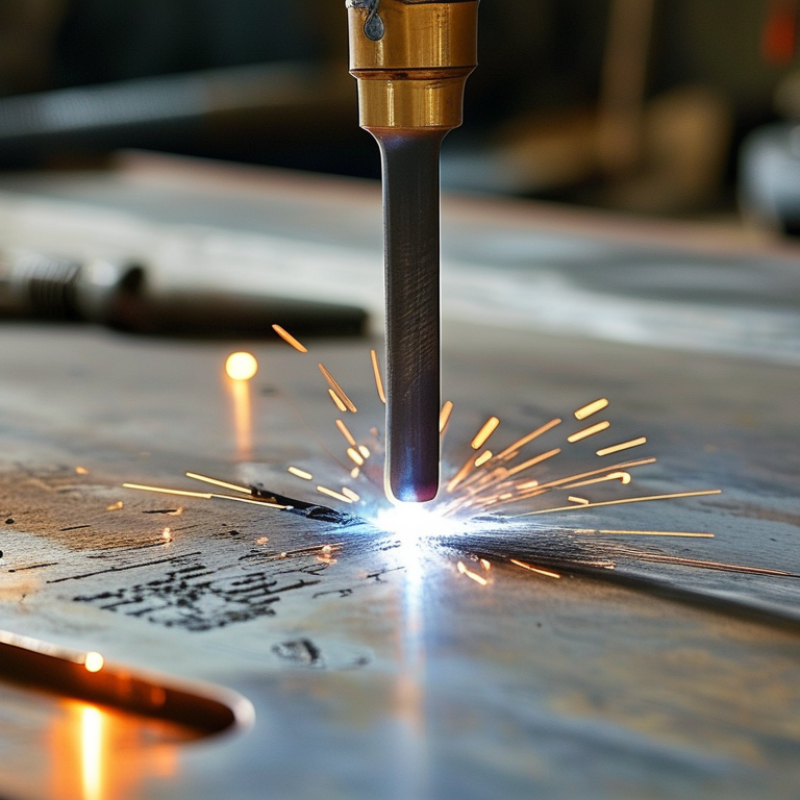
Stick electrode classification turns a confusing shelf into a practical decision. In AWS A5.1, E6010 means an electrode with 60 ksi minimum tensile strength, usable in all positions, with a cellulose-based coating. E7018 offers 70 ksi strength and a low-hydrogen coating. It suits structural steel, pressure work, and restrained joints. For sheet metal or light fabrication, E6013 often provides a smoother arc and easier slag removal. It can be forgiving, though “easy” does not mean universally suitable.
Application conditions matter more than memorizing numbers. E6010 penetrates deeply and performs well on root passes, especially with direct current electrode positive. E7018 produces a quieter arc and cleaner-looking beads, but damp storage can increase hydrogen-related cracking risk. Keep unopened low-hydrogen electrodes dry. Follow the manufacturer’s storage instructions and the qualified welding procedure.
The AWS 2023 Welding Workforce Data report estimates that the industry may need 330,000 new welding professionals by 2028. That shortage makes consistent training and electrode selection more important. In practice, match the electrode to base-metal strength, joint position, polarity, thickness, and inspection requirements. Stainless grades require closer classification checks under AWS A5.4, such as E308L-16 for common austenitic stainless applications. A chart helps. It can still mislead. Real joints, poor fit-up, and operator technique often change the result. Perform a test weld, inspect the bead profile, and question any selection made only by habit.
Match the diameter to metal thickness, joint design, and welding position. A 2.5 mm electrode suits many light sections. Larger rods deposit more metal but need higher current. Too large can burn through thin plate. Bigger is not automatically stronger.
Use the lowest practical diameter for better molten-pool control. Smaller electrodes reduce heat and make puddle movement easier. Keep the arc short. Watch the pool closely. Control matters more than speed.
Flat welding often allows larger electrodes and faster travel. Vertical and overhead welding usually need smaller electrodes. Gravity changes the puddle shape. A short scrap-metal test can reveal poor control.
Classification numbers indicate minimum tensile strength and usable welding positions. For example, a 60-grade electrode provides at least 60 ksi tensile strength. A 70-grade electrode provides at least 70 ksi. Higher strength is not always the correct choice.
Cellulosic coatings create a forceful arc and deeper penetration. They can suit root passes and outdoor work. Low-hydrogen coatings reduce hydrogen-related cracking risks. They require careful storage and possible rebaking. Moisture causes trouble.
It may suit restrained joints and critical structural connections. Confirm the approved welding procedure before use. Keep the electrodes dry according to technical instructions. A damp coating can cause porosity or cracking. Storage is easy to underestimate.
Check power output, duty cycle, polarity, and cable condition. Confirm the electrode suits the machine’s current type. A large rod may overload a small power source. Adjust current in small steps. Large jumps can create unstable results.
Provide effective ventilation and control fumes at their source. Wear suitable eye, skin, and electrical protection. Remove flammable materials and prepare fire controls. Keep gas cylinders upright. Inspect leads before striking the arc. Clean-looking steel is not always safe.
Make a short bead on scrap metal before production. Inspect spatter, fusion, arc stability, and penetration. When possible, inspect both sides of the bead. A neat surface can hide a weak root. My first setting is rarely right.
Choosing the right Stick Electrode is essential for producing strong, stable, and durable welds. Start by understanding electrode classifications, as they indicate characteristics such as tensile strength, coating type, welding current, and suitable applications. The electrode should also match the composition and condition of the base metal to reduce the risk of cracking, weak fusion, or poor weld quality. Consider the material thickness and select an appropriate electrode diameter, while also confirming whether the work will be performed in a flat, horizontal, vertical, or overhead position.
In addition to strength requirements, evaluate coating performance, arc stability, penetration, slag removal, and the desired appearance of the finished weld. Welding conditions such as moisture, temperature, accessibility, and surface cleanliness can affect electrode performance. Before starting, make sure the welding machine provides the correct current and polarity and that all safety equipment and ventilation measures are in place. A careful comparison of material, position, performance, equipment, and safety requirements will help ensure reliable results.

 Tianqiao Welding